 Skip to content

Building Client Loyalty Through Thoughtful Gestures
Table of Contents
- Why Thoughtful Gestures Build Client Loyalty
- Client Appreciation Ideas That Go Beyond the Hamper
- Client Thank-You Message Examples That Sound Genuine
- Corporate Gifting Etiquette: Getting the Timing Right
- How Customer Retention Strategies Rely on Personalisation
- Measuring Whether Your Gestures Are Building Client Loyalty
- Conclusion: Make the Gesture Fit the Client
- Frequently Asked Questions
Last Updated: October 9, 2026
Why Thoughtful Gestures Build Client Loyalty
A client who feels genuinely remembered will stay with you far longer than one who simply receives a generic gift. Building client loyalty through thoughtful gestures works because it turns a business transaction into a human moment. This guide from Two Streets Over breaks down how to choose, time and measure those gestures so they actually land.

Most businesses get this wrong from the start. They send the same box of snacks to every client, add a logo, and call it appreciation. The gift arrives, sits on a desk, and gets thrown out by Thursday. That is not a gift. It is a missed moment.
So what makes a gesture work? Three things: it fits the person, it arrives at the right time, and it carries your brand without shouting. Get those right and you build real loyalty. Get them wrong and you have paid to look exactly like everybody else.
Below, we show you how to pick gestures that stick, write messages that sound human, and measure whether any of it is working.
Client Appreciation Ideas That Go Beyond the Hamper
The strongest client appreciation ideas solve a small problem in the client's day. Think about what they actually do, then match the gesture to it.
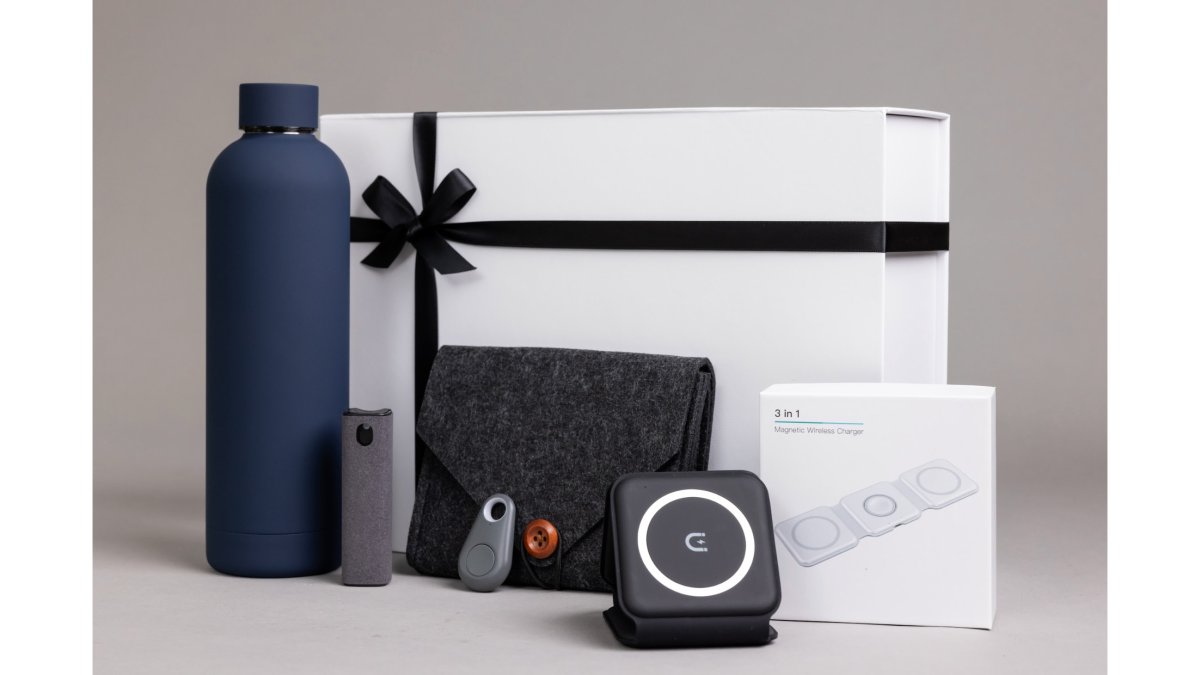
A remote worker who juggles cables and chargers all day will use a tidy tech kit every single morning. Our Digital Native gift box pairs a wireless charger, a key finder and a 750ml insulated bottle. It gets used, not stored. For a client who is always on the go, that is worth more than a box of biscuits.

Other gestures that land well:
- A journaling set for a client who talks about slowing down
- A handcrafted coffee scrub soap for the coffee obsessive
- A gift voucher when you genuinely cannot guess their taste
That last one matters. When you are unsure, a Two Streets Over gift voucher lets the client choose. It removes the guesswork and still feels personal.
Client Thank-You Message Examples That Sound Genuine
The card often matters more than the gift. A short, specific note beats a long, formal one every time.
Here are client thank-you message examples you can adapt:
"Hi Sarah, thanks for trusting us with the settlement last month. We know moving is stressful, so we hope this small box makes the first week in the new place a little easier. Enjoy it. - The team at [Your Business]"
"Mark, it has been a pleasure working with you this year. No ask here, just a thank you. We picked something we think you will actually use. Let us know if we got it right."
Notice what both do. They name the person, reference the real occasion, and make no request. That is the whole trick.
A few rules for the message:
- Use the client's name, always
- Mention the specific reason for the thank-you
- Keep it under four sentences
- Sign it like a human, not a department
Handwritten beats typed. If the box arrives with a handwritten card, the gesture feels considered rather than automated.
Corporate Gifting Etiquette: Getting the Timing Right
Corporate gifting etiquette comes down to one question: does the gift arrive when it still means something?
A settlement gift that shows up two weeks after the keys are handed over has lost its moment. A welcome gift that lands after the new starter's first week feels like an afterthought. Timing is not a detail. It is most of the gesture.
The occasions worth marking:
- Property settlement, within days of handover
- Employee onboarding, on or before day one
- Client milestones and renewals
- End of financial year, for genuine partners
- A simple, no-reason thank-you, once or twice a year
There is also a line to respect. A gift should never look like a bid for business or a nudge for a decision. Keep the value sensible, attach no strings, and never tie a gift to a contract or a referral. If a client feels bought, the gesture backfires.
How Customer Retention Strategies Rely on Personalisation
Customer retention strategies live or die on whether the client feels known. Personalisation is how you prove it.
Generic gifting says: you are one of many. A fitted gesture says: we remembered you. That difference is why personalisation sits at the centre of any serious retention plan. It is not about spending more. It is about paying attention.
Ways to personalise without overcomplicating it:
- Match the gift to something the client mentioned
- Refer to their industry or role in the card
- Choose a theme, not just a product, such as wellness or tech
- Let the client pick when you are unsure
At Two Streets Over, we build gifts three ways: pick from our curated boxes, build your own online, or brief us for a fully bespoke gift. The bespoke route guarantees no one else will gift the same thing. Every box carries your brand, not ours, so the client remembers you.

That last point is the whole game. If the gifting company's name is on the box and yours is on the invoice, you have paid for someone else's brand recall.
Australian Taxation Office guidance on business gifts and deductions
Measuring Whether Your Gestures Are Building Client Loyalty
You can measure this. It just takes a little discipline.
Start by tracking the basics. Note who received a gift, when, and on what occasion. Then watch what happens next. Look for repeat business, referrals, and how quickly clients respond to you. Compare clients who received a fitted gesture against those who did not.
A simple scorecard helps:
What to track |
Why it matters |
How often |
|---|---|---|
Repeat business |
Shows if loyalty is holding |
Quarterly |
Referrals from gifted clients |
Word of mouth from a real moment |
Quarterly |
Response speed |
Warmth in the relationship |
Monthly |
Client feedback on the gift |
Whether it was used or ignored |
Per gift |
Ask directly, too. A short line in a follow-up email, "Did the box land okay?", tells you more than any dashboard. If clients mention the gift months later, it worked. If they cannot recall it, it did not.
Conclusion: Make the Gesture Fit the Client
The challenge is simple to state and easy to get wrong: most gifting looks the same, so most clients remember none of it. The fix is to make the gesture fit the person, not the template.
That is what we do at Two Streets Over. We offer ready-to-gift boxes, a build-your-own option, and a fully bespoke service where we start with your brief and budget. Every box carries your brand, sourced from Australian small businesses, with same-day delivery across the metro and free shipping Australia-wide on orders over $140.
Get started with Two Streets Over and turn client appreciation into loyalty you can actually measure.
Frequently Asked Questions
How do thoughtful gestures help build client loyalty?
A gesture that fits the recipient signals that you noticed them as an individual, not just as a line on a spreadsheet. That recognition is what makes a client remember you at renewal time. The gift itself matters less than the precision of the choice. A generic hamper duplicated across every client gets thrown out by Thursday; a box chosen around someone's actual habits gets used, photographed and mentioned to colleagues. Loyalty builds from that repeated, specific acknowledgement rather than from the size of the spend.
What are some simple client appreciation ideas that feel genuine?
Start with timing rather than price. A handwritten card sent the week a settlement completes lands harder than a gift sent months later. Other options include a gift voucher so the recipient chooses their own item, a small add-on such as a coffee scrub soap included with a larger order, or a curated box built around a known interest. The common thread is relevance. If you cannot explain in one sentence why this client received this particular item, the gesture is probably too generic to register.
How often should a business show client appreciation?
Tie gestures to moments rather than a fixed calendar. Natural trigger points include a completed settlement, a contract renewal, a work anniversary, a referral, or a milestone the client has mentioned. Quarterly contact suits ongoing retainers; project-based clients respond better to a single well-timed gesture at handover. Frequency without relevance reads as a mailout. A client who receives two precise gestures a year will remember them longer than one who receives twelve identical ones.
How can a business measure whether client appreciation improves retention?
Track renewal rate, referral volume and repeat purchase frequency before and after you introduce a gifting programme, and segment clients who received a gesture against those who did not. Response rate matters too: a thank-you reply, a social post or a verbal mention at the next meeting all indicate the gift landed. Order data helps here, since bulk orders of ten or more can be branded with your logo on the box, ribbon and card, making it simpler to link a gifting campaign to a specific client group.