 Skip to content

Is Professional Gifting Worth It for Small Business?
Table of Contents
- The Real Cost of Professional Gifting for Small Business
- Are Tax Deductible Business Gifts Worth Claiming?
- DIY vs Outsourced: Comparing Professional Gifting Approaches
- How to Manage Bulk Corporate Gifting Without the Chaos
- Measuring Corporate Gifting ROI for Small Business
- Gift Options That Actually Get Used
- The Verdict: When Professional Gifting Pays Off
- Frequently Asked Questions
Last Updated: September 16, 2026
The Real Cost of Professional Gifting for Small Business
Professional gifting is the practice of sending curated, branded gifts to clients, prospects, or employees to strengthen a business relationship. For small businesses, the question is rarely whether gifting works. It's whether the spend justifies itself against every other line item competing for the same budget.
This guide from Two Streets Over examines that question honestly, including the costs most gifting articles skip over.
The real cost sits well above the sticker price. Packaging, personalisation, delivery, and the administrative hours spent coordinating it all add up fast. A gift that looks like a $60 spend on paper often lands closer to $90 once it reaches a desk. That gap is where small businesses get caught out.
Australian Taxation Office guidance on business gift deductions
What You Actually Spend Per Gift
The per-unit price is only the starting point. A realistic cost stack for a small business sending 20 client gifts looks like this:
Cost Component |
Typical Share of Total |
|---|---|
Product or gift contents |
Largest single cost |
Branded packaging and ribbon |
Moderate, scales with customisation |
Personalised card or message |
Small but non-negotiable |
Delivery and handling |
Varies sharply by distance |
Admin and coordination time |
The hidden one |
Most small businesses underestimate the last row. Someone has to collect addresses, chase confirmations, match gifts to recipients, and handle the awkward follow-up when a delivery goes missing.
Hidden Costs That Blow the Budget
Three costs catch people out. First, re-sends: when a gift arrives damaged or to the wrong address, you pay twice. Second, storage: bulk orders that arrive early need somewhere to live. Third, the opportunity cost of a generic gift that gets binned, which means the entire spend produced nothing.
Are Tax Deductible Business Gifts Worth Claiming?
Tax deductible business gifts are gifts given for business purposes that may qualify as a deduction, provided they meet the rules and aren't entertainment. Whether a gift is claimable depends on its value, its purpose, and who receives it.
The rules matter here, and they're specific. The Australian Taxation Office treats many gifts differently from entertainment, and some gifts above certain thresholds attract fringe benefits tax instead of a simple deduction. Small businesses should confirm their position with their accountant before assuming a gift is claimable.
ATO guidance on fringe benefits tax and gifts
The practical takeaway: keep clean records. Note who received each gift, why, and what it cost. That documentation is what makes a claim defensible.
DIY vs Outsourced: Comparing Professional Gifting Approaches
The DIY versus outsourced decision comes down to volume, consistency, and how much your time is worth. Below is how the two approaches compare across the factors that actually matter.
Factor |
DIY Gifting |
Outsourced Gifting |
|---|---|---|
Upfront cost per gift |
Lower |
Higher |
Time required |
High, recurring |
Low |
Consistency across recipients |
Hard to maintain |
Built in |
Branding quality |
Depends on your effort |
Professional finish |
Scalability |
Breaks past a certain volume |
Designed for bulk |
Risk of duplicate gifts |
High |
Low |
When DIY Makes Sense
DIY works when you're sending fewer than ten gifts a year to people you know well. You can handpick each item, write a genuine note, and keep costs low. The trade-off is time, and the risk that your gifts start looking like everyone else's.
When Outsourcing Pays Off
Outsourcing earns its keep once volume climbs or consistency matters. A curated service handles sourcing, packaging, personalisation, and delivery in one step. Two Streets Over, for example, offers ready-to-gift boxes, a build-your-own option, and a fully bespoke service, with bulk pricing and white-label branding so the box carries your brand rather than the gifting company's.
How to Manage Bulk Corporate Gifting Without the Chaos
Managing bulk corporate gifting comes down to one principle: decide the system before you decide the gifts. Chaos comes from doing it backwards.
A workable process looks like this:
- Build a recipient list with addresses verified in advance
- Set a per-gift budget and a total ceiling
- Choose one or two gift tiers, not twenty
- Confirm branding requirements before ordering
- Place the order with a delivery window in mind
- Track deliveries and flag failures early
- Log every gift for your records
The single biggest mistake is leaving personalisation to the end. Cards and messages take time, and rushing them undoes the goodwill the gift was meant to create.
Measuring Corporate Gifting ROI for Small Business
Corporate gifting ROI for small business is measured by tying gifts to outcomes you already track: repeat business, referrals, response rates, and retention. If you can't connect a gift to one of those, you're guessing.
Here's a simple framework. Before you send, note the recipient's current value or status. After sending, watch for a change within a defined window, typically 30 to 90 days. Did they reorder, refer, respond, or renew? That's your signal.
For employee gifting, the markers differ: retention, engagement, and onboarding satisfaction. The principle holds. Decide what you're measuring before you spend.
Gift Options That Actually Get Used
Gifts that get used share one trait: they fit the recipient's actual life. A gift that sits in a drawer wasted your budget and your intent.
This is where most hampers fail. Boxes of snacks get duplicated across every client, and by Thursday they're in the bin. A gift that doesn't get used isn't a gift. It's a missed moment.
Practical, well-chosen items perform better. Consider what people keep on a desk or use weekly:
- A 3-in-1 wireless charger for phone, watch, and earbuds
- An insulated water bottle that replaces a disposable habit
- A leather-finish journal and pen for the note-takers
- Skincare and wellness items for genuine downtime
- A candle and a small indulgence for a proper evening off
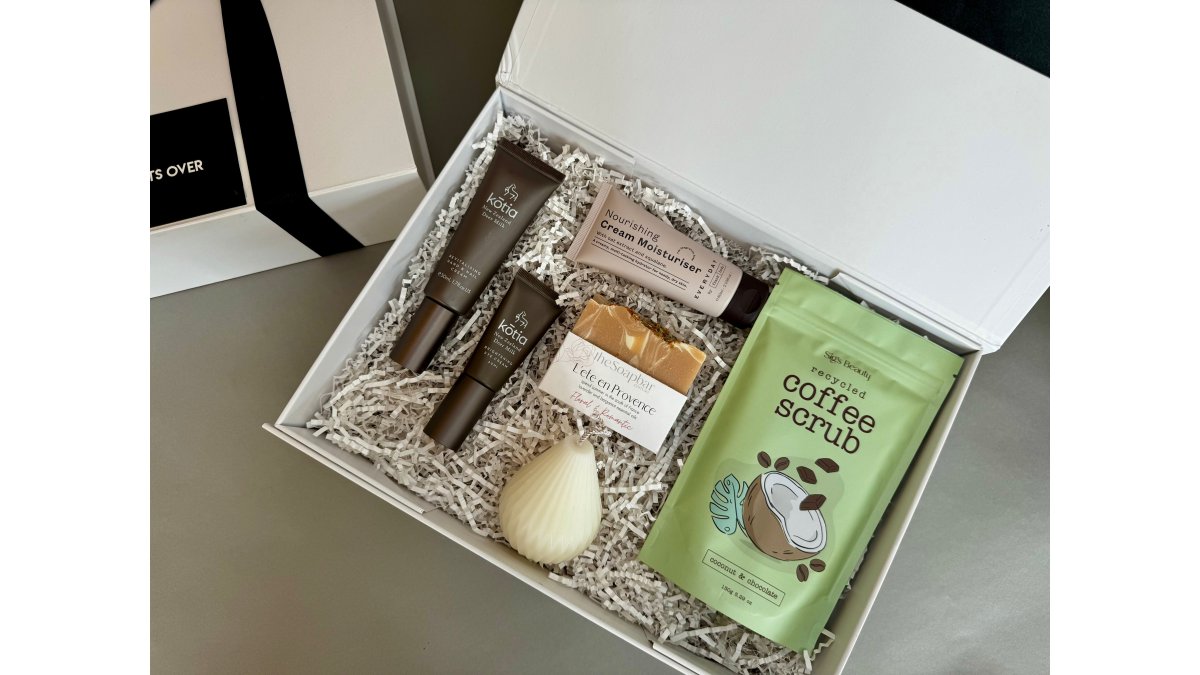
Two Streets Over builds boxes around exactly this logic. The Digital Native box pairs a key finder, a 3-in-1 wireless charger, a felt organiser, a 750ml insulated bottle, and a screen cleaner, all items that earn their place. The Self Care box leans into rest, with Frank Body skincare, a Kotia hand and nail cream, an Alokaia candle, handmade soap, and a coffee body scrub. Both ship Australia-wide with a handwritten card, and every box carries the client's brand, not the gifting company's.

The Verdict: When Professional Gifting Pays Off
Professional gifting pays off when three conditions line up: the recipient matters to your revenue, the gift is genuinely useful, and you can measure what changed. Miss any one of those and you're spending without a return.
For small businesses, the honest answer is that gifting is worth it at the relationship level, not as a scattergun gesture. A handful of thoughtful, well-sourced gifts to your best clients will outperform a hundred generic ones every time. That's the whole argument for treating gifting as strategy rather than admin.
Small businesses don't lose clients because they failed to send a gift.
Frequently Asked Questions
How does professional gifting improve client retention?
A thoughtful gift keeps your business top of mind between transactions. For real estate agents and mortgage brokers, settlement gifts arrive at an emotionally significant moment, which strengthens the association between your brand and a positive milestone. The key is relevance: a gift the recipient actually uses, like a Self Care box or Tech Elegance set, generates repeated exposure every time it is worn, used, or displayed. Generic hampers that get discarded by Thursday deliver no retention benefit at all.
Is corporate gifting considered a deductible business expense?
In most cases, yes, provided the gift is given for business purposes and meets the non-entertainment criteria. Gifts valued under $300 per recipient are generally deductible without fringe benefits tax complications. Gifts of $300 or more may trigger FBT obligations. Always keep records linking each gift to a client or staff relationship, and confirm your specific situation with your accountant, as thresholds and rules can change.
How do you measure the success of a gifting programme?
Track three things: response rate (how many recipients acknowledge the gift), repeat business from gifted clients versus a control group, and referral activity in the months following. For employee gifting, measure onboarding satisfaction scores and retention at the 12-month mark. A simple spreadsheet comparing gifted and non-gifted cohorts over two quarters gives you a clearer corporate gifting ROI for small business than gut feel alone.
What are the risks of inappropriate professional gifting?
The main risks are cultural insensitivity, excessive value that creates awkwardness or compliance issues, and gifts that feel transactional rather than genuine. Alcohol can be problematic for some recipients. Overly personal items may cross professional boundaries. The safest approach is to choose universally useful, high-quality items and pair them with a handwritten card that references the specific relationship or occasion, keeping the gesture warm but professional.
How can small businesses personalise gifts on a budget?
Personalisation does not require a big spend. A handwritten card mentioning a shared detail or milestone costs nothing extra and often matters more than the gift itself. Choosing a smaller number of higher-quality, curated boxes for your top clients beats sending cheap hampers to everyone. Bulk pricing on orders of 10 or more also brings per-unit costs down while maintaining quality, so you can personalise at scale without diluting the impact.